October 8, 2026 · 8 min
Women's Hormone Health in Maine: Cycles, Perimenopause, and Being Believed
By Mainestream Health Co.
← All articles
There's a specific kind of exhaustion that has nothing to do with sleep. It's the exhaustion of describing real symptoms to a provider, being tested, being told everything is normal, and going home with the distinct impression that you've been filed under "stressed."
If that's happened to you more than twice, this article is for you.
We're not going to argue that every symptom is hormonal — that would be its own kind of dishonesty. But we will argue that women's hormone health is chronically under-tested, badly timed when it is tested, and interpreted against reference ranges that were never designed to answer the question you're asking.
Why "normal" so often isn't an answer
Three specific problems make standard hormone testing fail women.
The timing problem. Female sex hormones aren't a fixed value — they're a curve that moves across a cycle. Estradiol and progesterone drawn on day 3 mean something completely different than the same values drawn on day 21. A lab drawn at a random point and compared to a generic range can look perfectly reassuring while missing an obvious pattern.
This is why we ask menstruating patients to schedule the draw on day 19–21 of a 28-day cycle — the luteal phase, when progesterone should be at its peak and is actually measurable.
The range problem. Reference ranges describe the middle 95% of the people who got tested. That's a population statistic, not a health standard, and it's wide. A value can sit inside a range and still be a meaningful change for you.
The panel problem. Checking estradiol alone tells you almost nothing. Hormones operate as a system — the sex hormones, the thyroid, the adrenal axis, the pituitary signals driving all of it, and insulin sitting underneath the whole thing influencing everything.
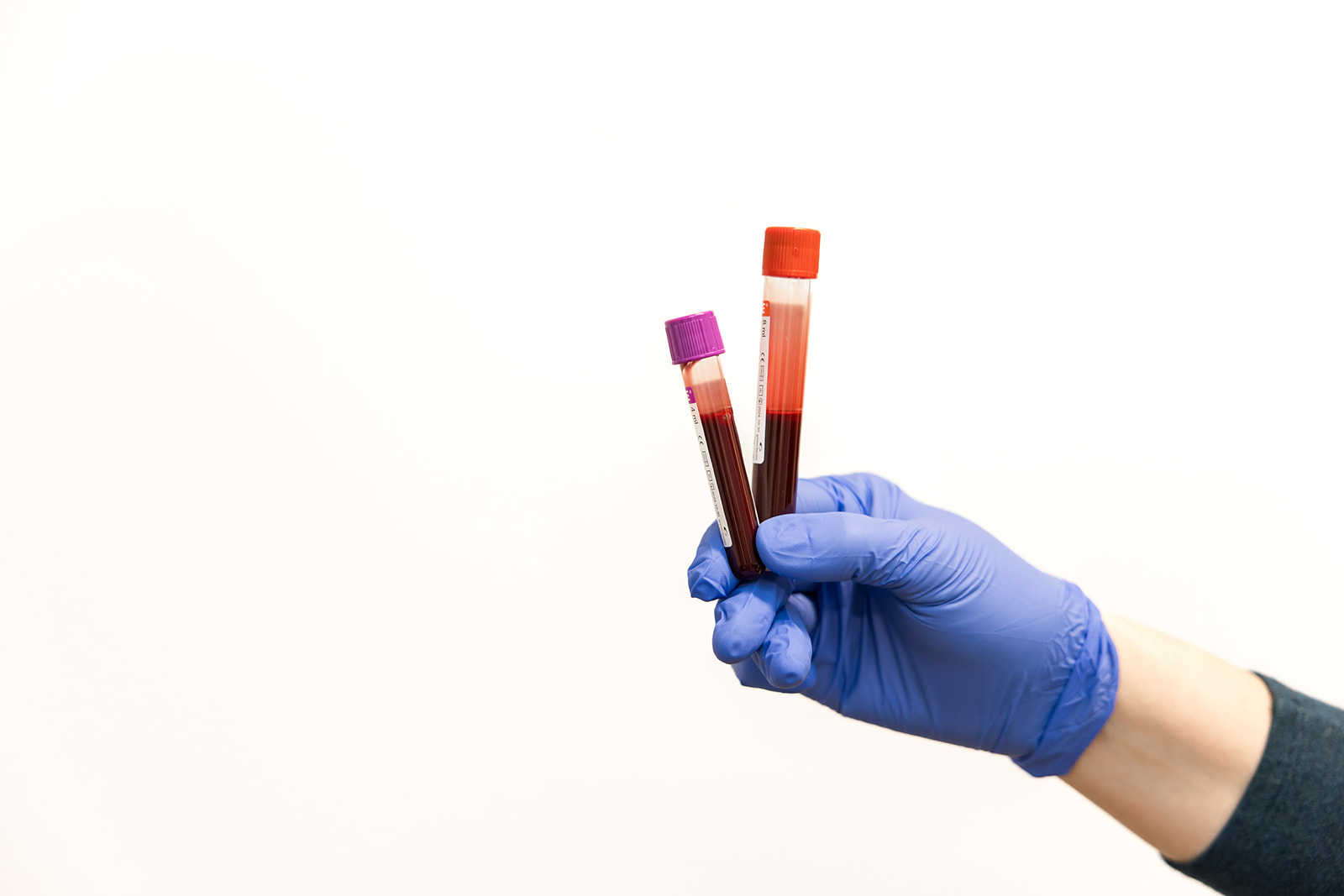
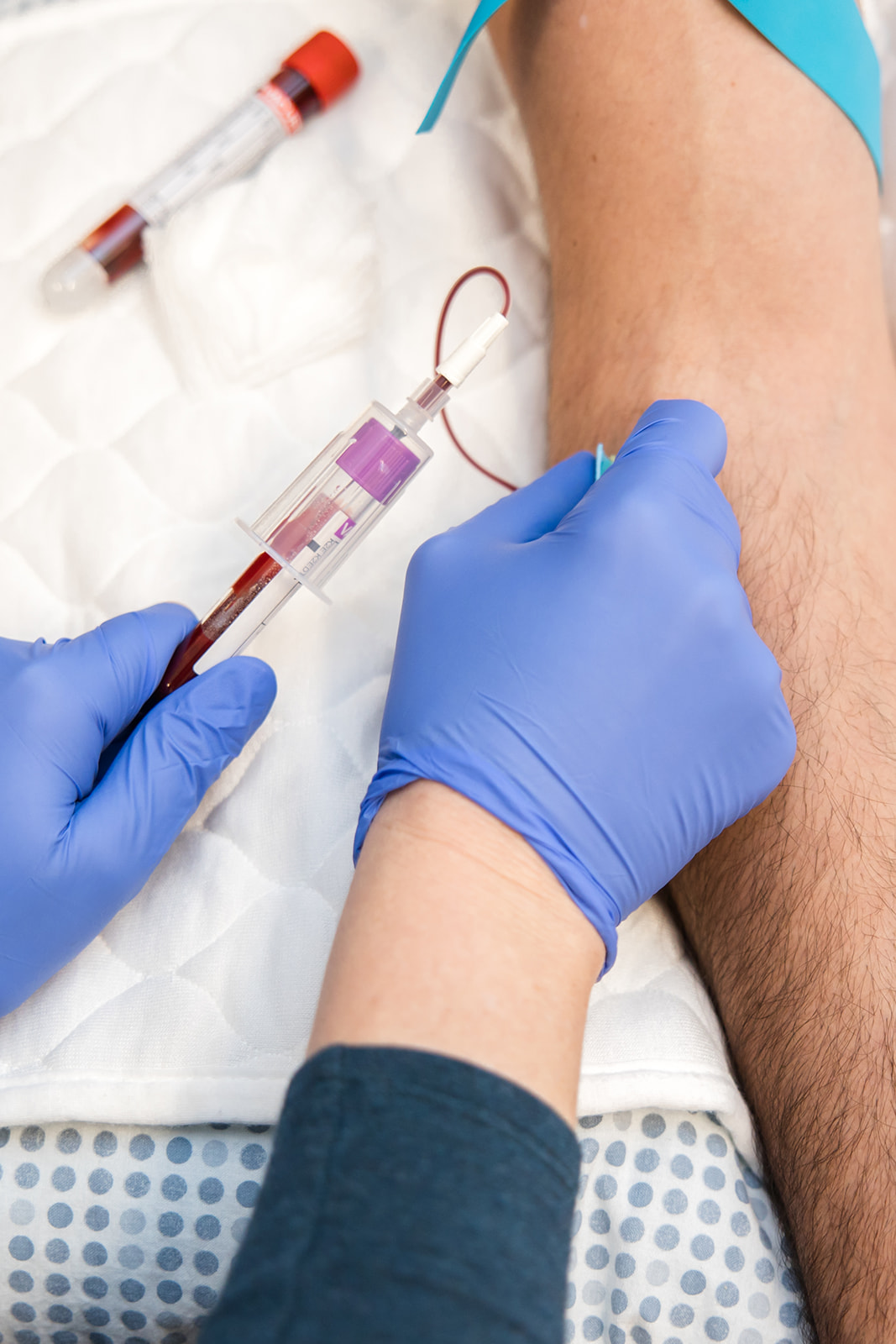
Our Women's Optimal Health Panel runs 75 biomarkers, covering sex hormones, endocrine markers, complete blood count, a comprehensive metabolic profile, and related categories. Targeted testing — comprehensive thyroid, comprehensive autoimmune, MTHFR, and specialty panels such as DUTCH Complete — gets added when the picture calls for it. We customize every order to the patient — up to 150 biomarkers where the case calls for it, with results typically back in two to three business days. Current pricing is on our lab testing page.
The reproductive years: cycles are a vital sign
A menstrual cycle is one of the most informative recurring data points a woman produces, and it's routinely treated as a nuisance rather than a signal.
Things a cycle can tell you: whether you're ovulating (which determines whether you're making meaningful progesterone at all), whether your luteal phase is long enough, whether thyroid function is adequate, whether you're eating and recovering enough to support reproduction, whether insulin resistance is present, and whether inflammatory or structural issues are in play.
Concerns we work with regularly:
- Cycles that are irregular, absent, very heavy, or very short
- Significant cramping and pelvic pain
- PMS and premenstrual mood changes that feel disproportionate
- Cyclical migraines
- Fertility support, both before and during trying to conceive
- Pregnancy discomfort, labor preparation, and postpartum recovery
Chinese medicine, notably, has been paying detailed attention to menstrual cycle patterns for roughly two thousand years, and Dr. Shanna Hudgin's acupuncture and herbal work is often the most direct tool we have for cycle regularity, cycle pain, fertility support, and postpartum recovery. Our acupuncture guide covers that side in depth.
Perimenopause: the decade nobody warned you about
Here's the fact that reframes everything for a lot of patients in their late thirties and forties: perimenopause can last years — commonly four to eight, sometimes longer — and it starts well before periods stop.
During it, hormones don't glide gently downward. They swing. Estradiol can spike higher than it ever did in your twenties and then crash within the same month. Progesterone declines earlier and more steadily as ovulatory cycles become less reliable. The result is volatility, and volatility is what produces symptoms.
What that actually feels like:
- Sleep that stopped working — particularly waking at 2 or 3 a.m. and not getting back down
- Anxiety or irritability that doesn't match your circumstances
- Cycles changing character: closer together, heavier, then unpredictable
- Brain fog and word-finding trouble that is genuinely alarming the first time it happens
- Body composition shifting toward the middle despite no change in habits
- Joint aches that appeared out of nowhere
- Hot flashes and night sweats — which many women don't get until much later, and whose absence proves nothing
- Libido quietly disappearing
The cruelest part is the timing. This lands in the years when women are typically carrying careers, teenagers, and aging parents simultaneously — which makes "you're probably just stressed" both plausible and useless.
Menopause and the long shadow of 2002
Menopausal hormone therapy went through a public collapse after the 2002 Women's Health Initiative headlines, and an entire generation of women was steered away from treatment as a result.
The research conversation has moved substantially in the two decades since — regarding which women benefit, at what age relative to their final period, with which formulations, and by which route of administration. The nuance that got lost in the original headlines matters enormously.
We're not going to summarize twenty-four years of an evolving evidence base in a blog paragraph, and you should be skeptical of any clinic that does — in either direction. What we'd say is this: if you were told in 2005, or 2015, that hormone therapy was simply off the table, that decision deserves a fresh conversation with a clinician who has followed the literature since. It may still be the right answer for you. It may not be. But it should be a decision, not an inheritance.
Our approach is bioidentical hormone therapy for women — including perimenopause and menopause care — built around your symptoms, history, and results rather than a template, with periodic retesting to verify response and adjust dosing. Your provider is Paige Farris, FNP-BC.
Thyroid, iron, and the two things most often missed
Two findings show up so frequently in women's panels that they deserve their own mention.
Thyroid. Autoimmune thyroid disease is dramatically more common in women, and it's frequently missed when only TSH is run. A full panel — free T4, free T3, reverse T3, and antibodies — catches patterns a single TSH will not. Hypothyroid symptoms overlap almost perfectly with perimenopausal symptoms, which is exactly why both need to be on the same panel.
Iron. Ferritin is often low in menstruating women, particularly with heavy cycles, and low ferritin produces fatigue, hair shedding, exercise intolerance, and brain fog long before hemoglobin drops enough to be called anemia. A normal CBC does not rule this out.
Where structure and regulation come in
We're a clinic built on Structure, Regulation, Optimization, and women's hormone health touches all three.
Structure — pregnancy, postpartum, and years of carrying children reshape the mechanics of a spine and pelvis. Gonstead chiropractic addresses that directly, and we do prenatal and postpartum care.
Regulation — the stress axis and the reproductive axis are wired together. Chronic stress physiology directly suppresses reproductive hormone production; it's not a metaphor, it's a mechanism. Acupuncture, sleep, and nervous system regulation are legitimate hormone interventions.
Optimization — bioidentical hormone therapy, targeted supplementation, and where appropriate, peptide therapy under provider oversight.
Doing these in that order is why we can often tell a patient that her first move isn't a prescription.
Honest limits
Not every symptom is hormonal. Some of what brings women in turns out to be thyroid, iron, sleep apnea, an autoimmune process, a mental health condition, or something that needs a specialist referral — and we'll tell you that. Hormone therapy also isn't appropriate for everyone; there are genuine contraindications and they need discussing.
What we won't do is tell you nothing's wrong because a number landed inside a range.
Frequently asked questions
Why do my hormone labs come back 'normal' when I feel terrible?
Three common reasons. Timing: female sex hormones move across a cycle, so a draw at a random point can look reassuring and tell you nothing. Range: reference ranges describe the middle 95% of people tested, which is wide enough that a meaningful change for you can still sit inside it. Panel: checking estradiol alone tells you almost nothing, because hormones operate as a system alongside thyroid, adrenal, pituitary, and insulin signaling.
When in my cycle should I get hormone labs drawn?
On day 19–21 of a 28-day cycle. That is the luteal phase, when progesterone should peak and is actually measurable.
How long does perimenopause last?
Commonly four to eight years, sometimes longer, and it begins well before periods stop. During it, hormones do not decline smoothly — they swing. Estradiol can spike higher than it ever did in your twenties and then crash within the same month, while progesterone declines earlier and more steadily. That volatility is what produces symptoms.
What are the early signs of perimenopause?
Sleep that stopped working, particularly waking at 2 or 3 a.m.; anxiety or irritability disproportionate to circumstances; cycles changing character; brain fog and word-finding trouble; body composition shifting toward the middle despite unchanged habits; new joint aches; hot flashes and night sweats, though many women do not get these until much later; and loss of libido.
What gets missed most often in women's lab work?
Thyroid and iron. Autoimmune thyroid disease is far more common in women and is frequently missed when only TSH is run — a full panel with free T4, free T3, reverse T3, and antibodies catches patterns TSH will not. Low ferritin is common in menstruating women and causes fatigue, hair shedding, exercise intolerance, and brain fog long before hemoglobin drops enough to be called anemia. A normal CBC does not rule it out.
Come get properly tested
You don't need a referral, and you don't need to be an established patient to order a panel.
Call our Gray, Maine office at 207-317-6770 or book online. 15 Main Street, Unit 106, Gray, ME 04039.
This article is for general educational purposes and is not medical advice. Hormone evaluation and therapy require individual assessment by a qualified provider and are not appropriate for everyone; individual results vary. Panel contents and prices are current as of publication and subject to change.