October 4, 2026 · 7 min
Acupuncture, Cupping & Gua Sha in Gray, Maine: A Complete Guide
By Dr. Shanna Hudgin
← All articles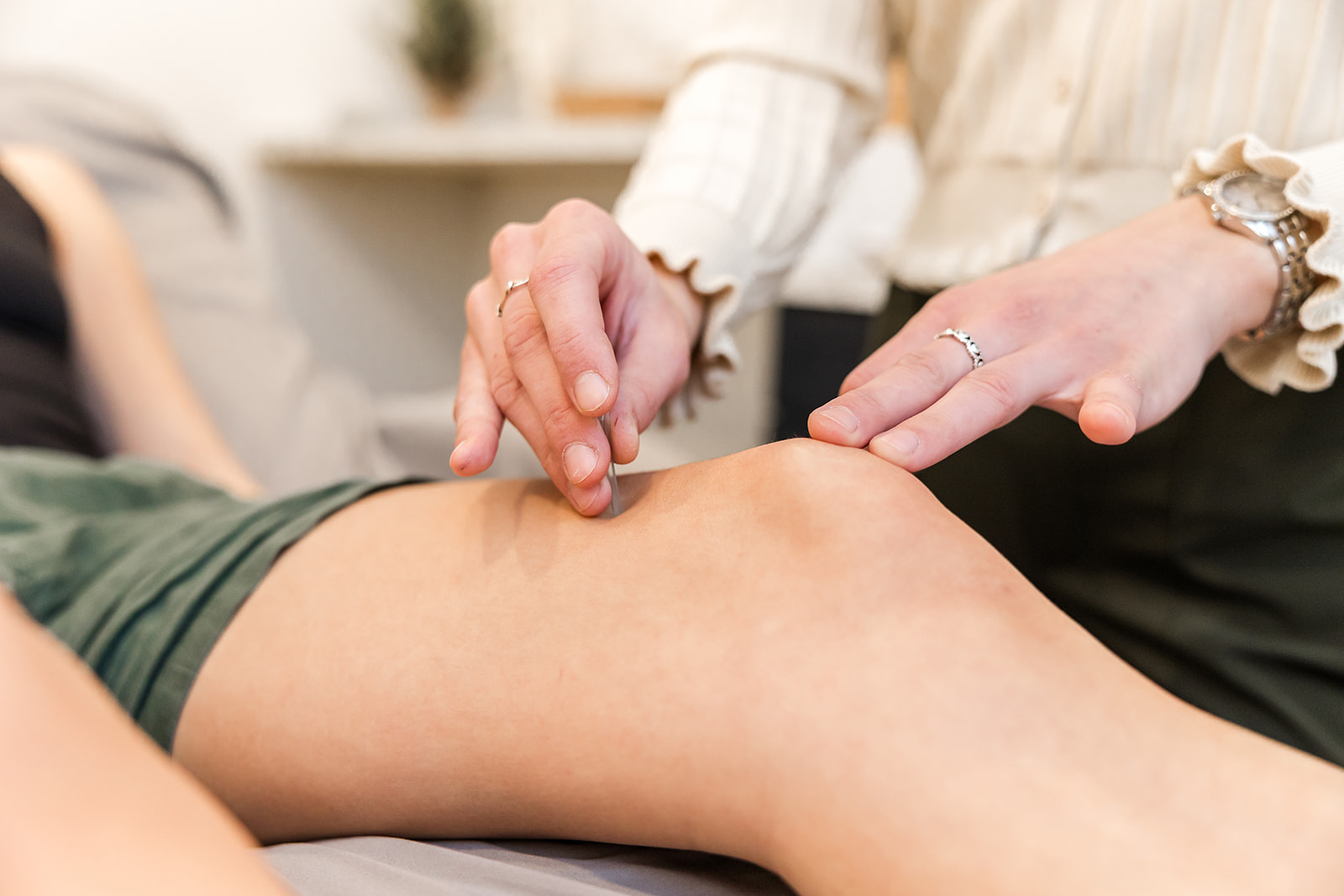
Acupuncture has an image problem in both directions. Half the people who hear about it picture something mystical and unscientific. The other half have seen a study headline and assume it's just a placebo with better branding. Neither of those is what happens in a treatment room.
Chinese medicine is a complete diagnostic and therapeutic system with roughly two thousand years of accumulated clinical observation behind it. At Mainestream Health Co. in Gray, Maine, Dr. Shanna Hudgin practices it as exactly that: a system with its own logic, its own diagnostic language, and its own toolkit — one that happens to pair unusually well with structural and functional care.
This is the complete guide to what we do and who it's for.
The organizing idea: flow
The core of Chinese medicine is the observation that health depends on movement. Blood moves. Fluids move. Breath moves. Nervous system signals move. Digestion is a movement. Menstrual cycles are a movement. When things move freely and in the right rhythm, you feel well. When something gets stuck, backed up, depleted, or stuck in the wrong direction, you get symptoms.
Our goal is to take a patient from a state of illness and dysfunction to a healthy, free-flowing system. That's not a metaphor about energy — it's an extremely practical way of asking, at every visit, what is stuck, and what's causing it?
What acupuncture appears to influence
Modern research on acupuncture is genuinely mixed, and anyone who tells you otherwise is selling. What we can say honestly is that needling has been observed to interact with several systems at once, which is part of why it shows up in so many different clinical conversations:
- The nervous system — local and central responses to stimulation, including effects on pain signaling and autonomic tone
- The hormonal system — the stress and reproductive axes both respond to autonomic input
- The vascular system — local circulation and vasodilation around treated tissue
- The immune system — local inflammatory signaling
- The musculoskeletal system — muscle tone, trigger points, and fascial tension
The evidence base is stronger in some areas than others. Pain and nausea have the most human data behind them. Other applications rest more on clinical tradition and observation. We'll tell you which category your situation falls into.
The four tools we use
Acupuncture
Hair-thin, single-use, sterile needles placed at specific points based on your diagnosis. Most people are surprised by how little they feel. Most are more surprised by how deeply relaxed they get — a lot of patients fall asleep on the table, which is itself diagnostically interesting in a population that mostly doesn't sleep well.
Cupping
Glass cups create suction on the skin, lifting tissue rather than compressing it. It's the inverse of massage, and it's used to support circulation and lymphatic flow through an area that feels tight, congested, or stagnant. Yes, it leaves marks. No, they aren't bruises in the injury sense, and they fade over several days.
Gua Sha
A smooth-edged tool is stroked along lubricated skin to release stagnation and support local circulation. It's fast, it's tolerable, and it's one of the oldest tools in the medicine. If you've ever wanted to do a gentler version at home, the stainless steel gua sha tool in our shop is the version we recommend for facial and neck work.
Chinese herbal medicine
This is the half of Chinese medicine that most Americans have never encountered. Herbal formulas are combinations — often eight to fifteen herbs — designed to work together, with each ingredient modifying the others. Formulas are selected and modified for the individual, not prescribed off a shelf by symptom name.
We carry a curated selection of classical and modern formulas in our online shop, and we keep practitioner-only products available through our Fullscript dispensary.
What people actually come in for
Acute concerns: injuries and sprains, colds and flus, infections, post-surgical recovery, skin flare-ups.
Chronic concerns: persistent pain, chronic illness and fatigue, hormone regulation, stress and the physical toll it takes, neurological symptoms, menstrual irregularities and cycle pain, and digestive disorders.
Two categories deserve special mention because they're where we see some of the most consistent results:
Women's health across the lifespan. Cycle regularity, cycle pain, fertility support, pregnancy and labor preparation, postpartum recovery, and the perimenopausal transition. Chinese medicine has been paying close attention to menstrual cycles for a very long time, and the diagnostic vocabulary for cycle patterns is remarkably detailed.
Stress and the nervous system. A huge portion of what walks through our door is a nervous system that has been in a defensive posture for years. Digestive symptoms, sleep problems, tension headaches, jaw clenching, and unexplained pain all cluster in these patients. Regulation is a real clinical target, not a wellness slogan.
Why acupuncture and chiropractic belong in the same building
This is the part I'd underline. Structural care and nervous system regulation are two halves of the same problem, and most patients need both.
A patient with a genuine mechanical problem — a disc, a facet, a specific subluxated segment — needs that corrected. Needling around it can reduce guarding and pain, but it won't change the mechanics. Conversely, a patient whose neck keeps re-tightening every time they leave the office may have a structural issue that's being held in place by a nervous system stuck in high gear, or by muscle tone that needs to be addressed directly.
Under one roof, we can see both. Dr. Bartlett and I look at the same patient from two directions and compare notes. That's not something you get when your chiropractor and your acupuncturist have never spoken.
Where it sits in the Mainestream model
Our clinic runs on Structure, Regulation, Optimization. Acupuncture and Chinese medicine are the regulation layer. Before we start interpreting complex labs or layering in hormone or peptide therapy, we want a nervous system that isn't screaming and a body that's sleeping, digesting, and moving reasonably well. Advanced care is far easier to read — and far more effective — on a regulated system.
What a first visit looks like
Your initial acupuncture exam is a genuinely thorough intake — health history, current concerns, and the diagnostic elements specific to Chinese medicine, including pulse and tongue assessment. Then we treat. You'll leave with a working diagnosis, a plan, and usually a realistic sense of how many visits it should take to know whether this is working for you.
Initial exam is currently $260; follow-up appointments are $95. We're a cash-pay clinic — no insurance billing, HSA and FSA accepted, superbills available on request.
Frequently asked questions
Does acupuncture hurt?
Most people are surprised by how little they feel. The needles are hair-thin, sterile, and single-use. A common response is deep relaxation — many patients fall asleep on the table, which is itself diagnostically interesting in a population that mostly does not sleep well.
What does acupuncture actually do?
Needling has been observed to interact with several systems at once: the nervous system, including pain signaling and autonomic tone; the hormonal system; local circulation; immune signaling; and muscle tone and fascial tension. The evidence base is stronger in some areas than others — pain and nausea have the most human data behind them, while other applications rest more on clinical tradition and observation.
What is the difference between cupping and gua sha?
Cupping uses glass cups to create suction that lifts tissue rather than compressing it, supporting circulation and lymphatic flow through a congested area. Gua sha uses a smooth-edged tool stroked along lubricated skin to release stagnation and support local circulation. Both can leave temporary marks that fade over several days; neither is bruising in the injury sense.
What conditions is acupuncture used for at your clinic?
Acute concerns include injuries and sprains, colds and flus, infections, post-surgical recovery, and skin flare-ups. Chronic concerns include persistent pain, chronic illness and fatigue, hormone regulation, stress, neurological symptoms, menstrual irregularities and cycle pain, and digestive disorders. Women's health across the lifespan and stress-related nervous system dysregulation are two of the most consistent areas.
How much does acupuncture cost in Gray, Maine?
The initial acupuncture exam is currently $260 and includes a comprehensive health history review and Traditional Chinese diagnostic evaluation. Follow-up appointments are $95. Mainestream Health Co. is cash-pay and does not bill insurance; HSA and FSA are accepted and superbills are available.
If you've been told to just live with it
That's the sentence we hear most. Sometimes it's true. Often it means the system that looked at you didn't have a tool for what you have.
Call our Gray, Maine office at 207-317-6770, or book online. We're at 15 Main Street, Unit 106, Gray, ME 04039.
This article is for general educational purposes and is not medical advice. Acupuncture and herbal medicine require individual evaluation; the evidence base varies by condition and individual results vary. Chinese herbal formulas can interact with medications — always tell your providers what you are taking. Statements about herbal products have not been evaluated by the Food and Drug Administration and are not intended to diagnose, treat, cure, or prevent any disease.


