August 15, 2026 · 2 min
Static vs. Motion Palpation: Two Ways Gonstead Doctors Find the True Problem
← All articles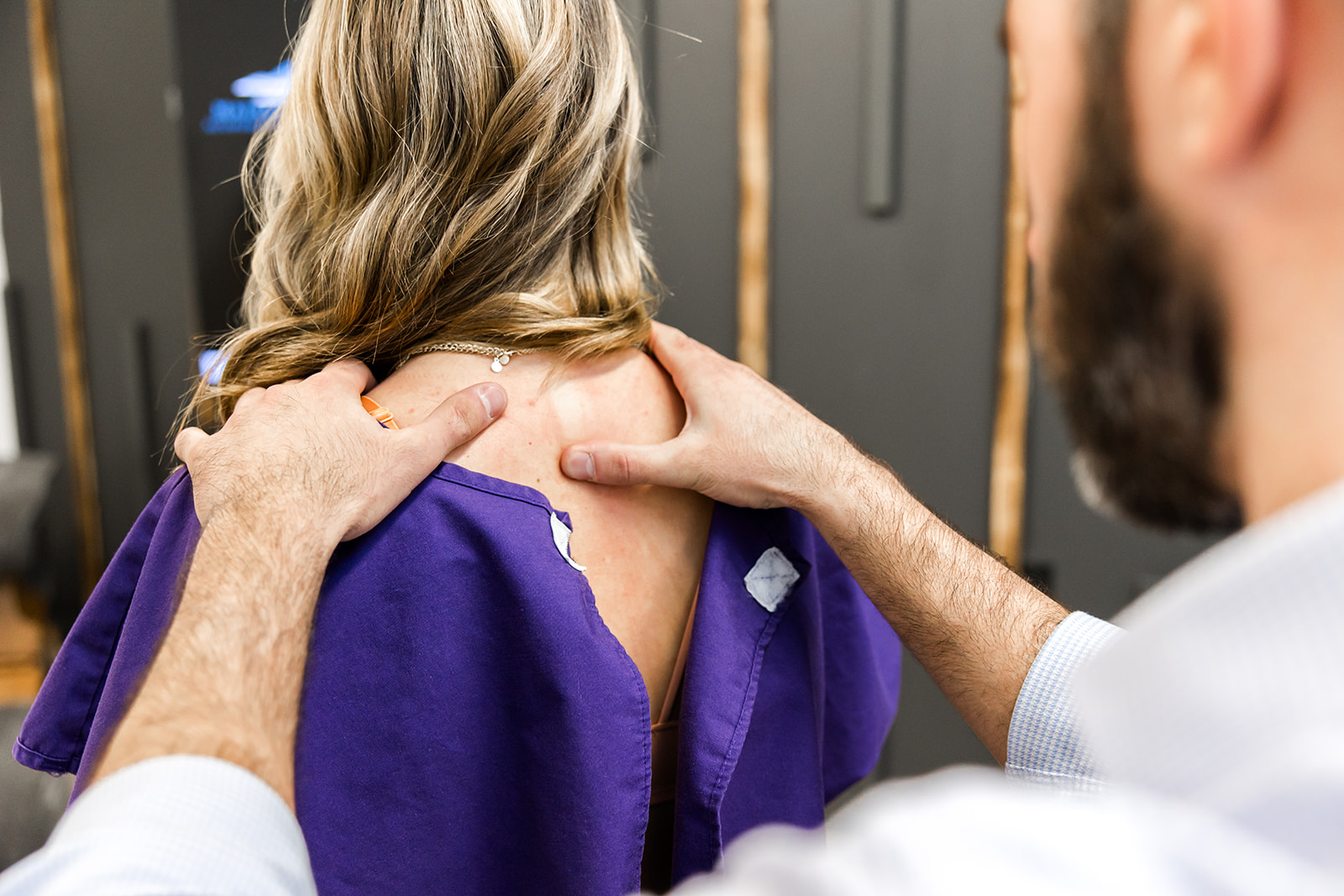
Palpation is a word for hands-on examination, and in Gonstead technique it happens two distinct ways, both in a weight-bearing position rather than lying passively on a table.
Static palpation is done with the patient standing or seated normally. The doctor checks each level of the spine for tenderness, swelling, muscle tightness, and tissue texture changes — signs that a segment is under stress, even before it's moved.
Motion palpation follows, checking how each vertebral segment moves relative to the ones next to it. A joint that's stuck, restricted, or moving abnormally compared to its neighbors is a strong indicator of the true segment involved — not just the area where pain happens to be felt.
That last point matters. Pain is often referred, meaning you feel it somewhere other than where the actual problem is. A hip issue can refer pain down the leg; a mid-back segment can refer pain that feels like it's coming from the shoulder. Relying on where it hurts, without palpating the whole spine, can lead to treating the wrong level. Combining static findings, motion findings, instrumentation, and X-ray is what allows the exam to zero in on the actual source rather than just the symptom.
This weight-bearing, segment-by-segment approach takes more time than a quick check of the area that hurts. That's intentional — it's part of why a Gonstead visit involves a full re-exam rather than jumping straight to an adjustment.
Read more: the five pillars of the Gonstead exam, what your first visit looks like.
Frequently asked questions
Is palpation uncomfortable?
It can involve brief pressure over tender areas, similar to a focused physical exam, but it isn't painful in the way an injury itself might be.
Why is palpation done standing instead of lying down?
Weight-bearing palpation reflects how the spine functions under normal load, which can reveal findings that disappear once you lie down and gravity is removed.
Does palpation replace the need for an X-ray?
No — they answer different questions. Palpation identifies restricted or tender segments; X-ray analysis measures the actual bony position and alignment.
[Book An Appointment](https://mainestreamhealthco.janeapp.com/) — Mainestream Health Co., 15 Main Street, Gray, ME. Call or text (207) 317-6770.


