August 22, 2026 · 5 min
Gua Sha: A Simple Ritual for Circulation, Lymphatic Flow & Facial Sculpting
By Dr. Shanna Hudgin, DACM, L.Ac.
← All articles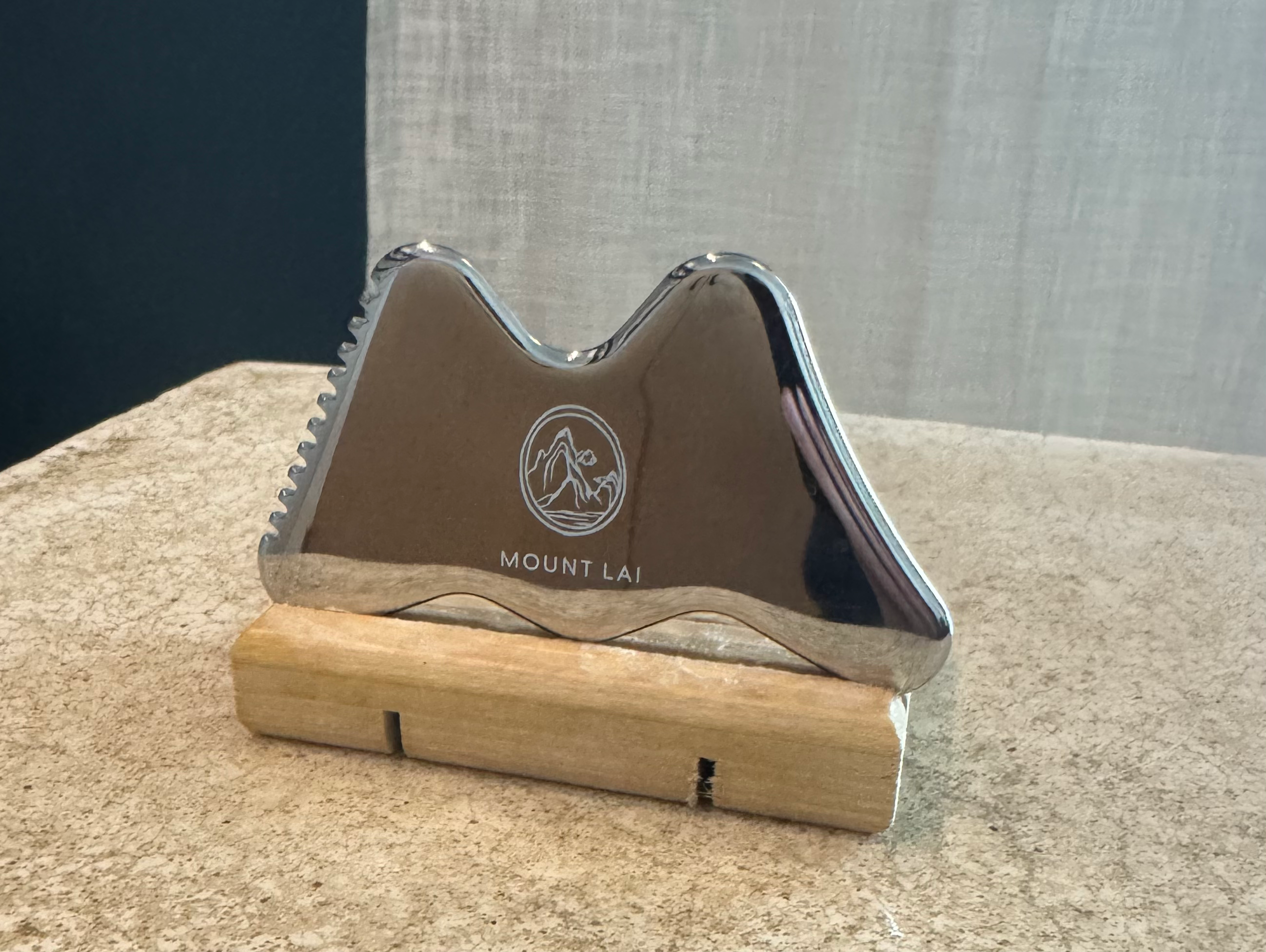
Gua sha is a traditional Chinese medicine technique that uses a smooth-edged tool to gently glide across the skin. With a simple sweeping motion, gua sha can help support lymphatic flow, circulation, facial relaxation, and healthy-looking skin — and it takes about five minutes a night.
It's also incredibly simple to incorporate into your daily routine.
What is gua sha?
Gua sha uses a smooth-edged tool to gently glide across the skin. While it has traditionally been used on the body, facial gua sha has become a popular way to support healthy-looking skin and create a relaxing, intentional skincare routine.
The key is in the technique: gentle pressure and consistent sweeping motions, rather than aggressively scraping or pressing into the skin.
What does facial gua sha do?
Supports lymphatic flow
Gentle facial massage can help encourage the movement of lymphatic fluid through the tissues. This can be especially helpful when the face feels puffy or stagnant after sleeping.
Using light, sweeping motions can help promote a refreshed, less puffy appearance.
Encourages circulation
The sweeping motion of gua sha can stimulate circulation near the surface of the skin. Increased blood flow can contribute to a healthy, naturally flushed appearance and help your skin look more awake and vibrant.
Supports a lifted, sculpted appearance
One of the most noticeable cosmetic effects of facial gua sha is the way it can leave the face looking more lifted, defined, and sculpted.
By helping move fluid, support circulation, and release facial tension, gua sha can temporarily create a more refreshed and contoured appearance. Consistent use can make this a beautiful addition to your regular skincare routine.
Supports healthy skin
Gentle mechanical stimulation of the skin may help support the processes involved in maintaining collagen and healthy skin structure. When practiced consistently and appropriately, facial massage can be a simple addition to a skin-supportive routine.
Helps release facial tension
Your face holds more tension than you may realize. The jaw, temples, forehead, and neck can all become tight throughout the day.
Gua sha can also be used along the jaw, neck, shoulders, arms, and face to help release tension and can be incorporated into acupressure practices.
Can gua sha help with jaw tension and TMJ?
If you experience jaw tension or TMJ symptoms, try making five minutes of gentle gua sha part of your nightly routine. Focus on the jaw muscles, cheeks, temples, and surrounding areas using slow, comfortable strokes.
How do you use a gua sha tool?
The technique doesn't need to be complicated.
Start with clean skin and apply something that gives the tool enough slip to glide comfortably without pulling — a facial oil or balm. Emily Skin Soothers is a great place to start.
Then:
- Hold the tool relatively flat against your skin rather than digging the edge into the face.
- Begin with gentle, sweeping motions.
- Work from the center of the face outward.
- For the cheeks and jawline, sweep outward toward the ears.
- Along the forehead, sweep upward and outward.
- Use lighter pressure around delicate areas such as the eyes.
- Repeat each movement several times, always keeping the motion slow and controlled.
Think sweep, don't scrape.
Gua sha should feel relaxing and comfortable. You don't need significant pressure to make it effective.
Which gua sha tool do we recommend?
For facial gua sha, we recommend the Mount Lai Stainless Steel Facial Sculpting Tool.
We especially love the design because the contours of the tool are shaped to follow the natural contours of the face, making it easy to maneuver around the cheeks, jawline, brow, and other areas.
The stainless steel construction is non-porous and easy to clean, which is especially helpful for something you're using directly on your skin.
And there's another benefit we love: stainless steel naturally feels cool against the skin, adding a refreshing sensation to your gua sha ritual.
How often should you use gua sha?
Gua sha doesn't have to be another complicated step in your routine.
Five minutes a night can become a simple way to care for your skin, support circulation and lymphatic flow, and release the tension you accumulate throughout the day.
Keep your tool somewhere you'll see it, pair it with your favorite facial oil, and make it part of your evening routine.
When it comes to cosmetic results, consistency matters. A few minutes of gentle gua sha each night can be much more meaningful than an occasional intensive session.
Small ritual. Beautiful skin. A little more time to yourself.
Common questions about gua sha
Does gua sha hurt?
No. Gua sha should feel relaxing and comfortable. You don't need significant pressure to make it effective — think sweep, don't scrape.
Do I need to use an oil with gua sha?
Yes. Start with clean skin and apply something that gives the tool enough slip to glide comfortably without pulling on the skin — a facial oil or balm.
How long should a gua sha session take?
About five minutes. Consistency matters more than duration: a few minutes each night is more meaningful than an occasional intensive session.
Can you use gua sha on your body, or just your face?
Both. Gua sha has traditionally been used on the body, and can be used along the jaw, neck, shoulders, and arms as well as the face.
How do you clean a gua sha tool?
Stainless steel is non-porous and easy to clean, which is one reason we prefer it for something used directly on the skin.
When should you avoid gua sha?
Avoid areas of active irritation, broken skin, or inflammation, and always use gentle pressure.
As with any skincare practice, use gentle pressure and avoid areas of active irritation, broken skin, or inflammation.


