October 5, 2026 · 7 min
Functional Medicine in Gray, Maine: The Order of Operations
By Mainestream Health Co.
← All articles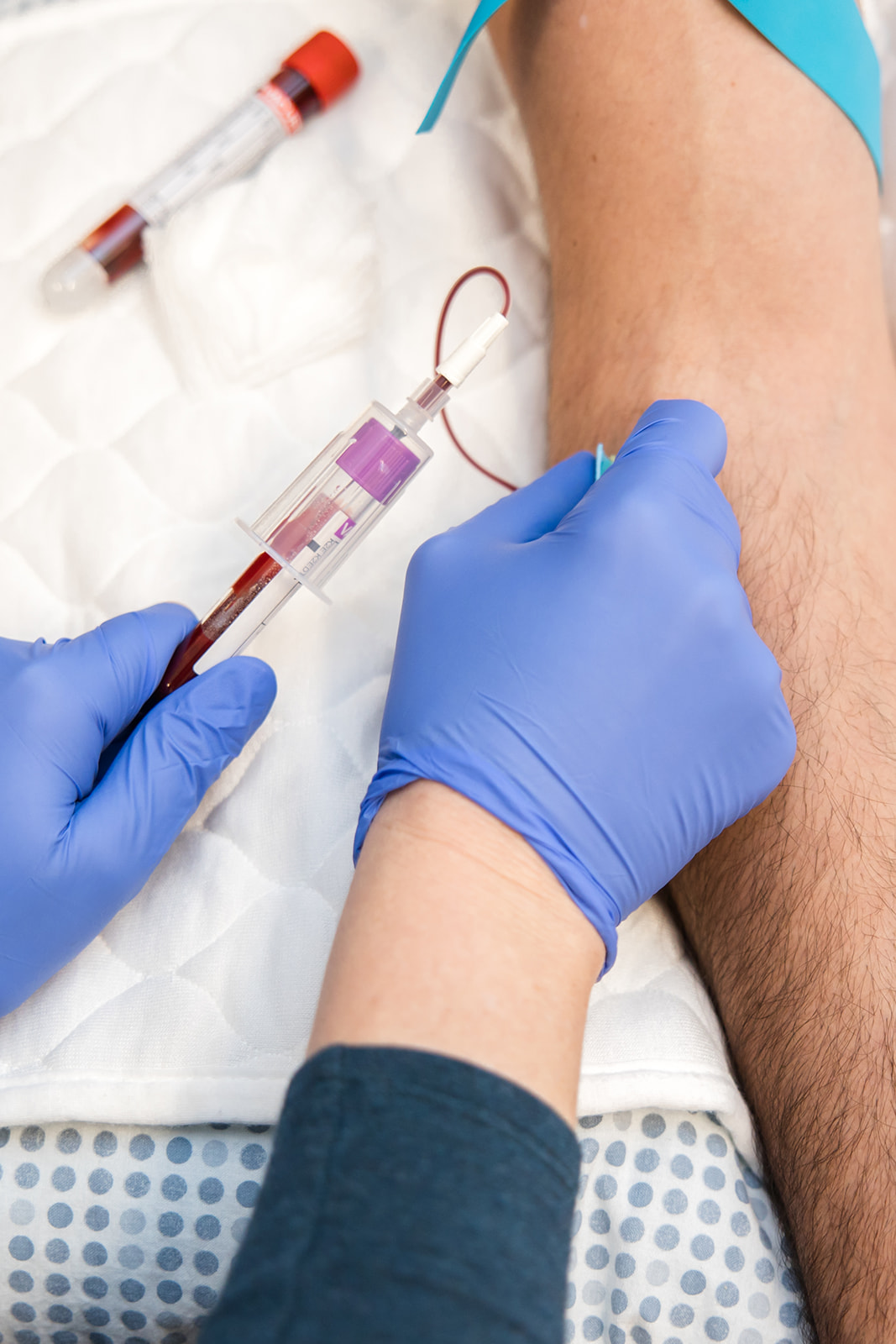
There's a sentence we say to almost every new functional medicine patient, usually about twenty minutes into the first visit, and it tends to land hard:
Most patients don't have one problem — they have six. And the six are talking to each other.
That is the entire reason this discipline exists. Conventional care is organized around isolating a single complaint, assigning it to a specialty, and treating it. It's very good at that, and if you have appendicitis you should absolutely go to a hospital. But it handles poorly the person who has fatigue and poor sleep and a gut that's been off for two years and a thyroid that's "borderline" and joint pain and a mood that's flatter than it used to be — and who has been told, six separate times, that each one is fine on its own.
The problem with stacking
Here's where a lot of well-meaning integrative medicine goes wrong. You identify six problems, so you start six interventions. A supplement for the gut. Something for sleep. A thyroid support. An adrenal protocol. A hormone. An anti-inflammatory.
Three months later the patient is taking fourteen things, feels marginally different, and nobody — including the provider — can tell you which one is doing what. If something helped, you don't know which. If something caused a side effect, you don't know which. You've bought expensive confusion.
We don't stack. We sequence.
The order of operations
Every functional medicine plan we build answers three questions in order:
1. Which of these problems is most likely driving the others?
Systems are connected, and the connections aren't symmetrical. Poor sleep degrades glucose handling, hormone production, recovery, and mood. Untreated gut inflammation affects nutrient status, which affects thyroid conversion and energy production. Chronic pain elevates stress hormones, which suppress sex hormones. Frequently, four of the six problems on your list are downstream of one or two upstream ones. Fix the upstream one and half the list quietly resolves.
2. Which of these is time-sensitive?
Some findings can wait a quarter. Some cannot. Part of a clinician's job is knowing the difference and being honest with you about it — including recognizing when something on your labs needs a referral to a specialist rather than a supplement from us.
3. Which will resolve on its own once we address the primary issue?
This is the question that saves patients the most money. If a symptom is a consequence rather than a cause, treating it directly is treating a smoke alarm.
Labs don't explain themselves
We test a lot, because you cannot sequence what you can't see. But we want to be clear about something that a lot of online functional medicine gets wrong: a lab result is data, not a diagnosis.
A number outside a reference range is a question, not an answer. A number inside a reference range can still be a problem in context — reference ranges describe a population, and some of them are wide enough to drive a truck through. What makes a lab useful is a clinician looking at the whole panel next to your actual history, symptoms, and physical exam.
Our foundational panels are deliberately broad:
- Men's Optimal Health Panel — 77 biomarkers, covering hormones, prostate markers, thyroid, metabolic and cardiovascular markers, complete blood count, liver, kidney, and nutrient status
- Women's Optimal Health Panel — 75 biomarkers, covering sex hormones, endocrine markers, complete blood count, comprehensive metabolic profile, and related categories
We add targeted testing when the picture calls for it — comprehensive thyroid, comprehensive autoimmune, MTHFR gene mutation testing, and specialty panels including DUTCH Complete and the GI-Advanced Profile.
We test up to 150 biomarkers when a case calls for it.
On cost: we customize every lab order to the patient, so there isn't a single number. Generally, lab work for an establishing patient lands somewhere between $150 and $250. Lab work here is part of care, not a standalone purchase — you'll have an initial visit where we decide what to order, and a follow-up where we go through the results and outline what happens next. In-office blood draw is $30 per draw. We don't bill insurance for lab work, and it's typically HSA/FSA eligible. Current details are on our lab testing page.
One practical note for women who are still cycling: schedule your draw on day 19–21 of a 28-day cycle. Sex hormone values are meaningless without knowing where in the cycle they were drawn.
What the process actually looks like
Visit one — 60 minutes. A real conversation and a physical exam. History, timeline, what's changed, what you've already tried, what your days actually look like. You leave with a working plan, not a promise to call you.
The draw. We schedule your fasted blood draw before you leave the building. Not "call us when you're ready" — scheduled.
Results review — 30 minutes. We go through the panel together, and we set priorities. This is where the order of operations gets built.
Foundations first. Before we add anything exotic, we work on eating, sleeping, and moving well. This is the least glamorous paragraph on this page and the most important one. Supplements and advanced therapies layered on top of five hours of sleep and a diet of convenience food are money set on fire.
Your provider for functional medicine here is Paige Farris, FNP-BC.
What a plan can include
Depending on what we find, a plan may involve targeted supplementation, further or more specific testing, hormone therapy, peptide therapy, or — frequently — chiropractic care and acupuncture.
That last part surprises people, and it shouldn't. For a patient in pain and running a dysregulated nervous system, structural and regulatory care is often the fastest way to restore sleep, movement, and nervous system regulation. Those three things are prerequisites for almost everything else working. It's not a cross-sell; it's the sequence.
Why an integrated clinic can sequence and a single-service clinic can't
If you're a hormone clinic, every patient's answer is hormones. If you're a supplement dispensary, every answer is a supplement. Not out of dishonesty — out of the shape of the toolkit.
Under one roof we have Gonstead chiropractic, acupuncture and Chinese medicine, functional medicine, hormone therapy, peptide therapy, and comprehensive lab testing. That means when we tell you your first move should be fixing your sleep and correcting a cervical problem before we touch your thyroid, we're not turning away business — we're just putting things in the right order.
That's the whole idea behind Structure, Regulation, Optimization. When the body is aligned and regulated, advanced care becomes clearer, more effective, and more sustainable.
Frequently asked questions
What is functional medicine, in practical terms?
It is an approach that looks for the upstream cause of a cluster of symptoms rather than treating each symptom separately. The working assumption is that most patients do not have one problem — they have several, and the several are connected. The clinical work is figuring out which one is driving the others.
How is this different from other integrative clinics?
We sequence rather than stack. A common failure mode in integrative medicine is starting six interventions at once, which leaves the patient on fourteen products with no way to tell which is doing what. We ask which problem is driving the others, which is time-sensitive, and which will resolve on its own once the primary issue is addressed — then do one or two things and check.
What lab testing do you run?
Foundational panels are deliberately broad: a Men's Optimal Health Panel at 77 biomarkers and a Women's at 75, covering hormones, thyroid, metabolic and cardiovascular markers, complete blood count, liver, kidney, and nutrient status. Targeted testing includes comprehensive thyroid, comprehensive autoimmune, MTHFR, and specialty panels such as DUTCH Complete and the GI-Advanced Profile.
What does lab work cost?
We customize every lab order to the patient, so there is no single number. For an establishing patient it generally lands between $150 and $250. Lab work here is part of care rather than a standalone purchase — there is an initial visit where we decide what to order and a follow-up where we review results and set priorities. In-office blood draw is $30 per draw. We do not bill insurance for lab work, and it is typically HSA/FSA eligible.
Who provides functional medicine at Mainestream Health Co.?
Paige Farris, FNP-BC, a family nurse practitioner, provides functional medicine, hormone therapy, and peptide therapy at the clinic in Gray, Maine.
How long does functional medicine take to work?
It is not fast. Root causes that took a decade to develop do not unwind in three weeks, and any clinic promising otherwise is describing marketing rather than physiology. What a patient should expect is to understand their own labs, to know why each step is happening in the order it is happening, and not to be taking a long list of products nobody can account for.
Honest expectations
Functional medicine is not fast. Root causes that took a decade to develop don't unwind in three weeks, and any clinic promising otherwise is describing marketing, not physiology. What we can promise is that you'll understand your own labs, you'll know why each step is happening in the order it's happening, and you won't be taking fourteen things nobody can account for.
Call our Gray, Maine office at 207-317-6770 to schedule. 15 Main Street, Unit 106, Gray, ME 04039.
This article is for general educational purposes and is not medical advice. Functional medicine care requires individual evaluation by a qualified provider; individual results vary. Lab panel contents and prices are current as of publication and subject to change. We do not bill insurance.


